
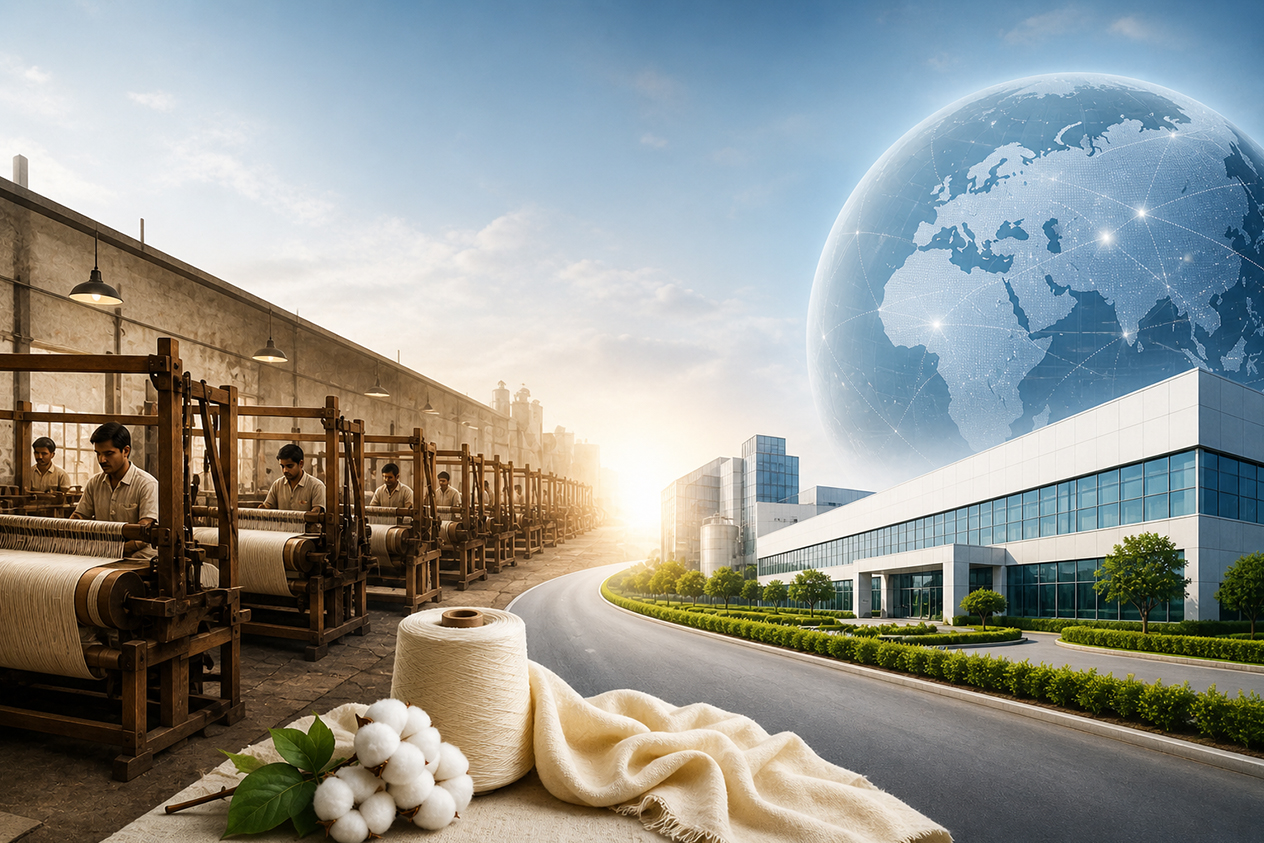
It started small. Like, actually small.
Every company says they started “from humble beginnings,” but here it really was just 12 looms and a basic textile setup. No big backing, no massive factory, nothing that screamed future empire. Just a business trying to make things work in a tough industry.
And textiles aren’t forgiving. If your costs go off, or your quality slips even a little, you feel it immediately. So in those early days, survival itself meant staying sharp. That kind of environment forces discipline, whether you like it or not.
Growth didn’t happen overnight (and that’s the point)
What’s interesting is that the group didn’t suddenly explode into something huge. It grew slowly, step by step. First, it built a strong base in textiles. Then, when things were stable enough, it started looking at other areas.
But even then, the moves weren’t random. They stayed close to what they already understood, like manufacturing, materials, and supply chains. That’s probably why the growth stuck instead of falling apart later.
A lot of businesses try to grow fast and figure things out later. This one did the opposite.
The packaging move changed everything
The real shift came when Chiripal Poly Films Limited entered the picture. That’s when things stopped being just about textiles.
Packaging might sound boring, but it’s everywhere. Food, cosmetics, medicines, everything depends on it. And once you enter that space, you’re not just serving local markets anymore, you’re part of a global system.
That changes the game.
Suddenly, quality isn’t just important, it’s expected every single time. Delivery delays aren’t acceptable. And scale actually matters.
This move basically pushed the group onto a bigger stage.
Going global means leveling up
Expanding outside India isn’t just about selling more. It comes with pressure. Different standards, different expectations, tighter deadlines.
So naturally, the group had to step up. Better machines, better processes, more consistency.
So naturally, the group had to step up. Better machines, better processes, more consistency.
And the fact that they’ve managed to stay and grow globally says a lot about how they handled that phase.
Then came energy, which actually makes sense
More recently, they moved into renewables with Grew Energy.
At first glance, it looks like a completely different space. But if you think about it, it’s not that random.
Manufacturing needs energy. A lot of it.
And energy costs aren’t stable. Plus, now there’s pressure to be more sustainable. So instead of just dealing with that from the outside, they decided to step into it directly.
It’s the same pattern again, just applied differently. Gain control where it matters.
The one thing that didn’t change
Even though the industries changed, the way they approached things didn’t.
They didn’t rush into decisions. They didn’t depend too much on outside factors if they could avoid it. And they kept building things in a way that could scale properly.It sounds simple, but sticking to that for 50 years isn’t easy.
So what’s the real takeaway?
Going from 12 looms to a multi-industry group sounds impressive, and it is. But the bigger takeaway is how it happened.
No sudden breakthroughs. No overnight success.
Just a series of decisions that made sense at the time, repeated over years.
Final thought
If you look at it closely, the story isn’t about size. It’s about direction.
They started small, figured things out as they went, expanded when it made sense, and kept adjusting along the way.
And after five decades, that approach seems to have worked better than most.